Distributed System 4
Distributed System 4
Communication
Persistence yes/no async yes/no 중요한거 같아
RPC
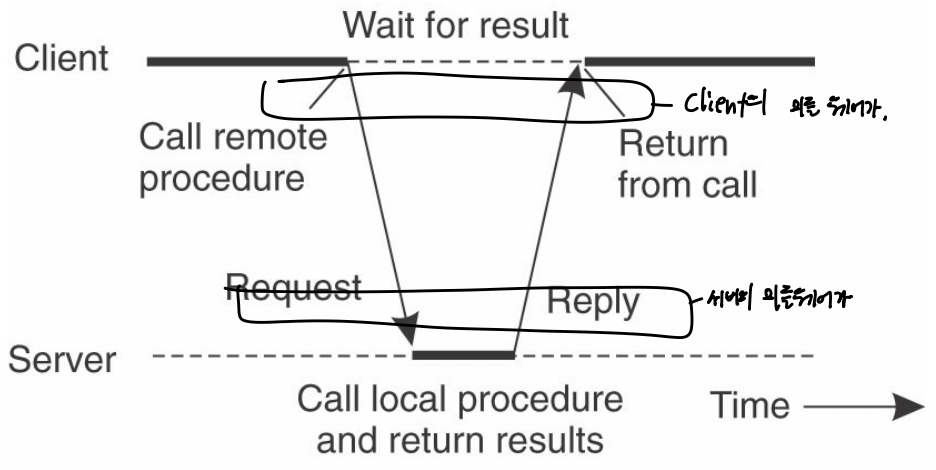
- Motivation: Process간 message exchange에서 communication이 conceal되지 않아 (Transparency가 없음)
- Idea: Middleware를 둬서 transparent하게 다른 machine에 있는 procedure(function)을 호출할 수 있게해
- 구현에 문제가 될것들
- function들은 ran on different address spaces
- parameter와 결과들은 heterogeneous machine간 주고받아해
- 일반적으로 Transient/synchronous한 방식
- 사용성은 좋은데 middleware의 처리가 많아
Parameter Passing 방법들
- Call by value: Simply copied to the stack - RPC에서 문제 안됨
- Call by reference: Pointer to a variable - RPC에서 문제 됨
- 문제 해결을 위해, 그 address에 있는 데이터를 보내는 식으로 할수 밖에 없어
- Call by copy/restore: Stack에 있는 data를 overwrite하고 그 함수가 끝날때 메모리에 있는 값을 update해줘
- 대부분의 환경에서 call by reference와 같은 효과를 가진다.
RPC의 경우에는 call by reference를 call by copy/restore을 써서 parameter passing을 해
- 만약 middleware가 어떤게 input/output인지 알고 있으면, 서로간 전달되는 message의 크기를 줄일수 있어
- 다만 pointer가 얽힌 것과 같은 복잡한 자료구조의 경우는 쉽게 해결할수 없어 아래와 같은 방법을 쓴다.
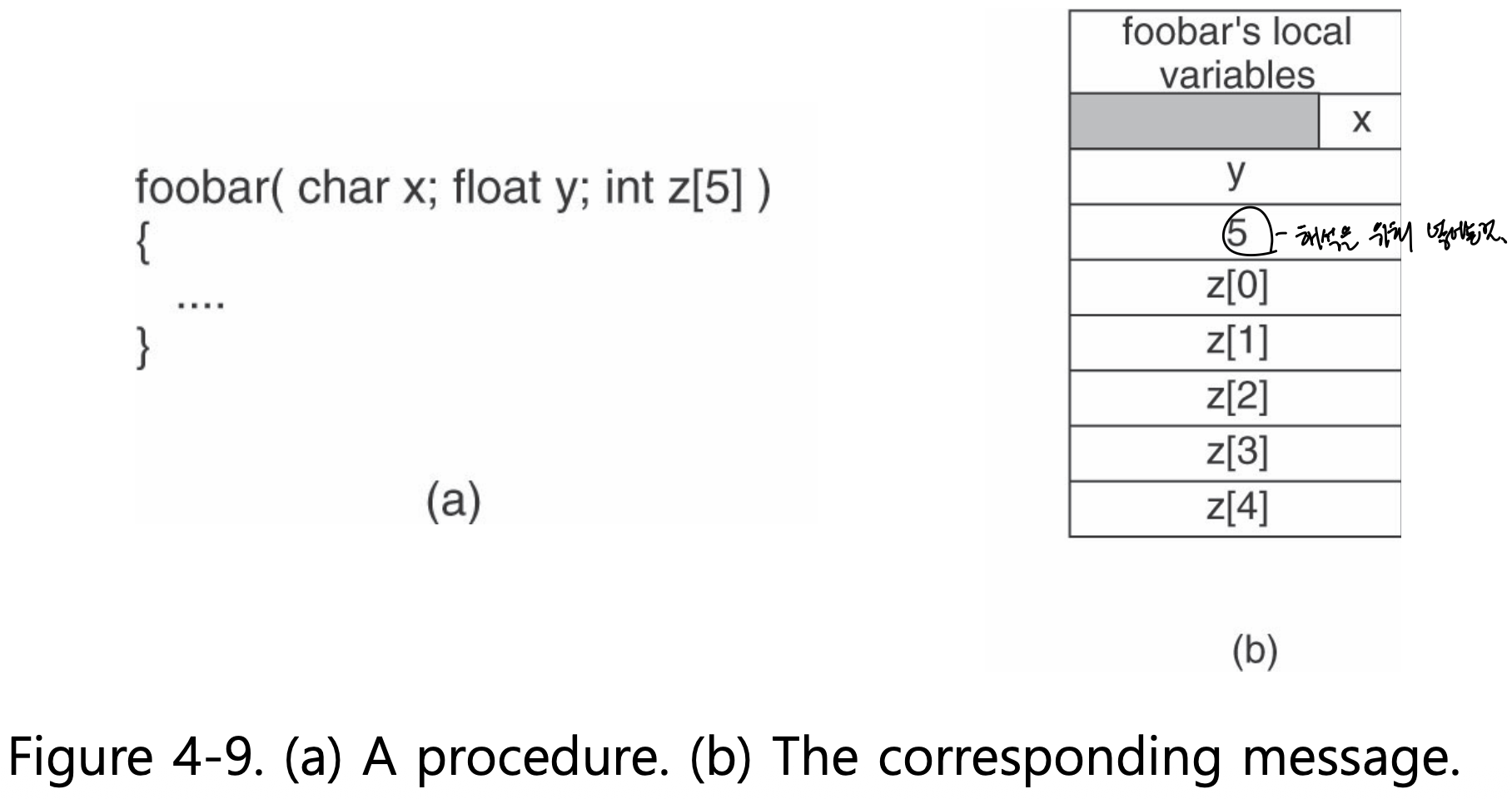
양측에 specification을 정의하고 packing(marshalling)을 하는식으로 처리하자)
- 메세지 포맷: e.g. 어떤 변수가 어느 위치에, 몇 바이트로 들어가는지
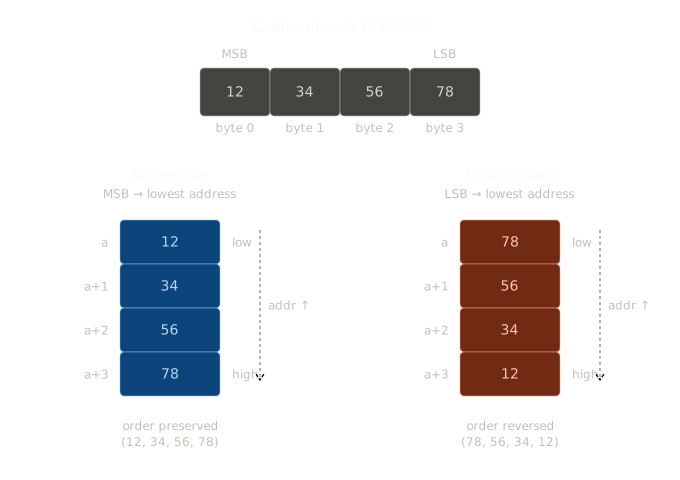
- 데이터 표현 방식 약속: e.g. Endian결정, 부동소수점은 어떻게 할건지
Endian 예시
- 숫자만 영향 받고 string은 영향받지 않음으로 그냥, byte stream전체를 뒤집는 방식으로는 해결되지 않아
요런것들을 middleware(stub)에서 하게 하자
Asynchronous RPC
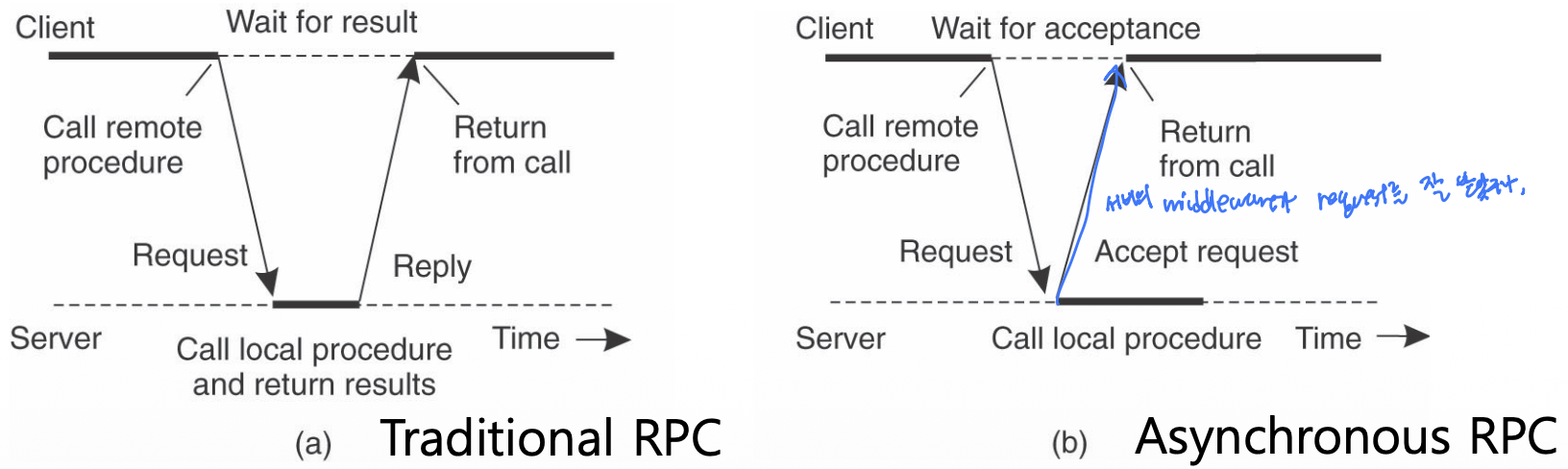
- 서버가 일을 처리하지 않고 받기만 하면 바로 return해줘
- 다른 variant of asynchronous RPC 존재
- Oneway RPC: client does not wait for an acknowledgement from the server
- Reliability가 보장되지 않은 상태에서 하면 client가 실제로 요청이 processed 됐는지 몰라
- 주로 같은 요청을 주기적으로 보내는 경우 이런식으로 씀
Socket
Berkeley Socket
- Socket: Transport layer의 서비스를 사용하기 위한 수단, conceptual communication end point
- TCP Socket Primitive
- socket: caller creates a new communication end point(소켓을 만들어)
- bind: OS에게 특정 port로 들어오는 message만 받겠다고, 이를 처리해 달라고 하기.
- Associates a local address with the newly-created socket
- Client side에선 필수적이지 않아. OS가 dynamically allocate port when the connection is up
- listen(Server side): Non-blocking call that allows the local OS to reserve enough buffers for a 정해진 최대 connection을 수 만큼
- accept(server side): Blocks the caller until a connection request arrive
- Request가 도착하면, 서버의 OS가 새로운 소켓을 만들고 caller한테 return 해줘
- connect(client side): caller가 보낼 connection request를 보내기 위한 transport-level address를 정해
- send, receive: Connection이 완성되면 message를 주고 받는거
- close: closing a connection
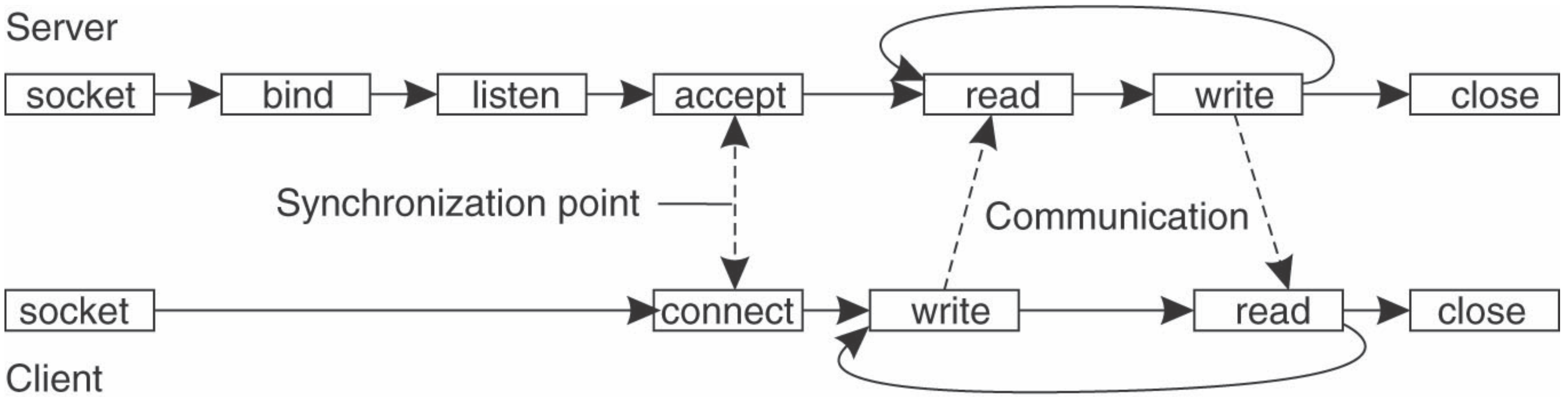
Message-oriented Persistent Communication
Queuing system을 사용해서 asynchronous하게 해주겠다.
Message queuing system or message-oriented middleware(MOM)
- Queue를 사용해서 persistent asynchronous communication을 가능하게 해줘
- Intermediate-term storage capacity for messages
- Application has its own queue, queues are private or shared (구현하기 나름)
- 성공적으로 send 됐다는거만 알고 실제로 받았는지는 몰라 (단순 queue에만 넣어논거니까)
- 양쪽이 둘다 online일 필요 없어
- e.g. E-mail, workflow, groupware, batch processing, etc…
그림과 같이 4가지 상태 다 가능하다.
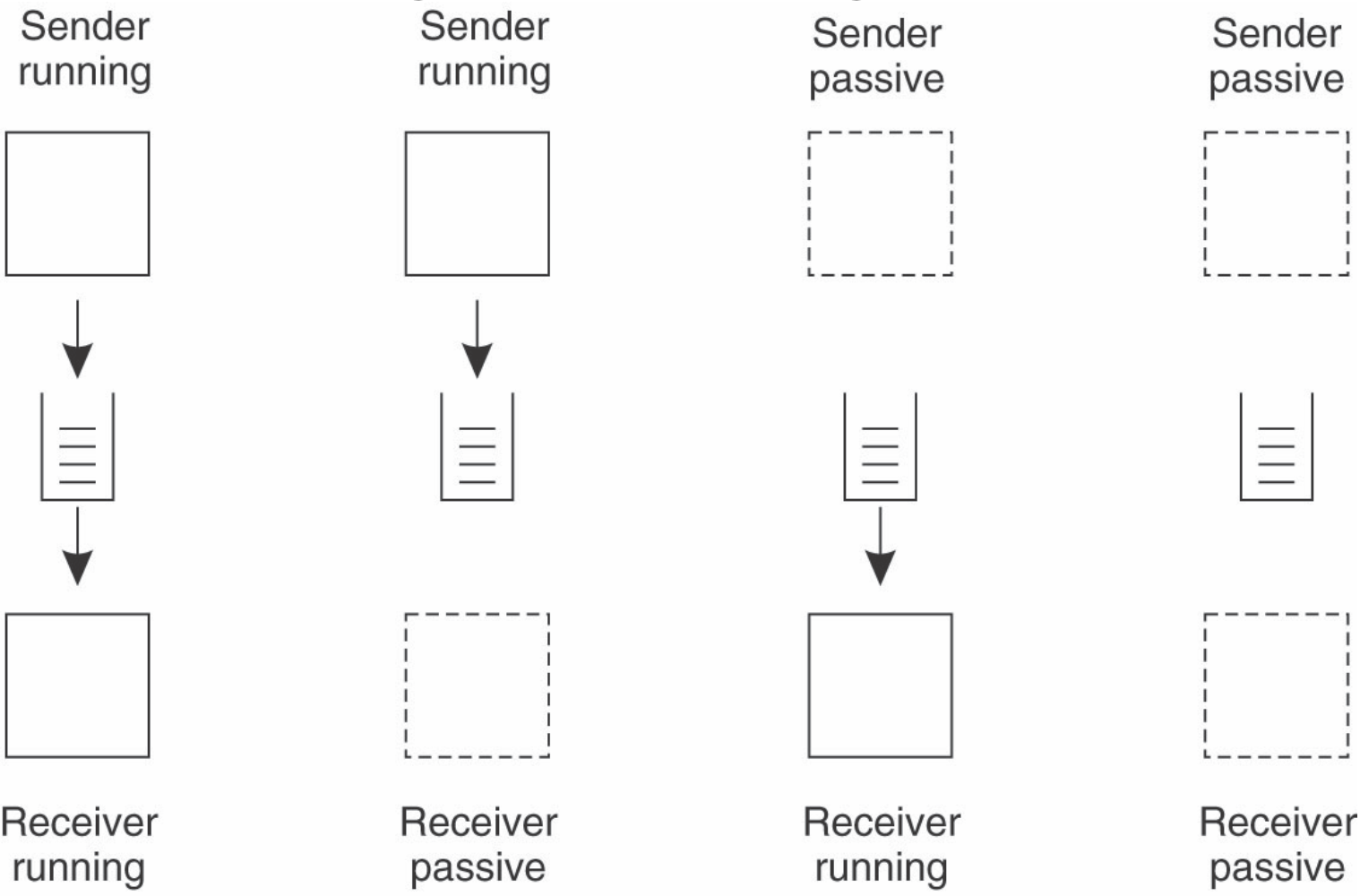
Basic Interface
- Put: Append a message to a specified queue (nonblocking call, 구현에 따라 달라질수 있어)
- Get: Block until the specified queue is nonempty (blocking call, 구현에 따라 달라질수 있어)
- Poll: Nonblocking variant of ‘get’ primitive
- Notify: queue에 message가 들어오면 알려줘
Restriction
- Same machine이거나 near by same LAN이여야 작동해 (범위가 좁다)
- Message에 destination queue에 대한 specification이 필요해
- Message-queuing system(middleware) is responsible for the message transfers
General Architecture
Queue Managers
- Queue manager interacts directly with the application
- relay: special queue managers that operate as router가 존재해
- DNS Server와 같은 naming service가 없어서 topology 관리가 필요해 (topology of the queuing network is static)
Relay
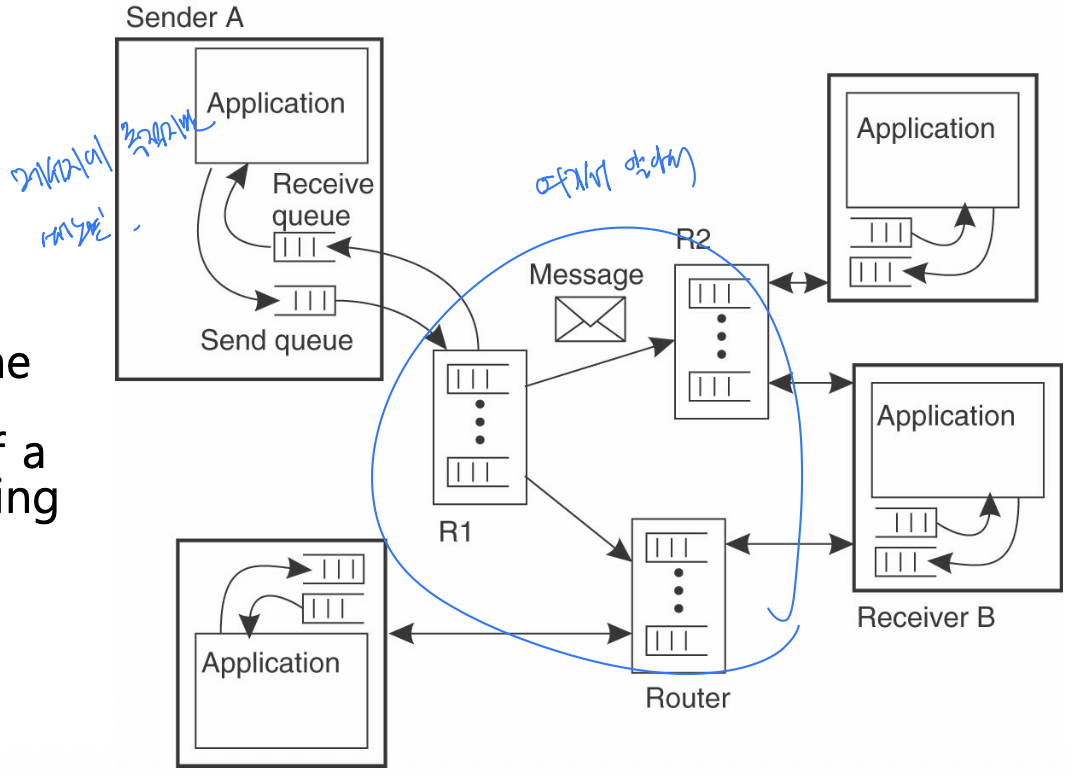
Application은 queue manager만 알고, 주소정보는 relay들 끼리만 알고 있게 해
- Application은 바뀐 주소 정보를 몰라도 되게 해
- Relays allow for secondary processing of messages
- logging for security, fault tolerance, transforming messages
Message brokers
Queue를 사용하는 이점을 확장시키겠다: message의 중계자, 다양한 포멧을 다루고 conversion을 수행해주겠다.
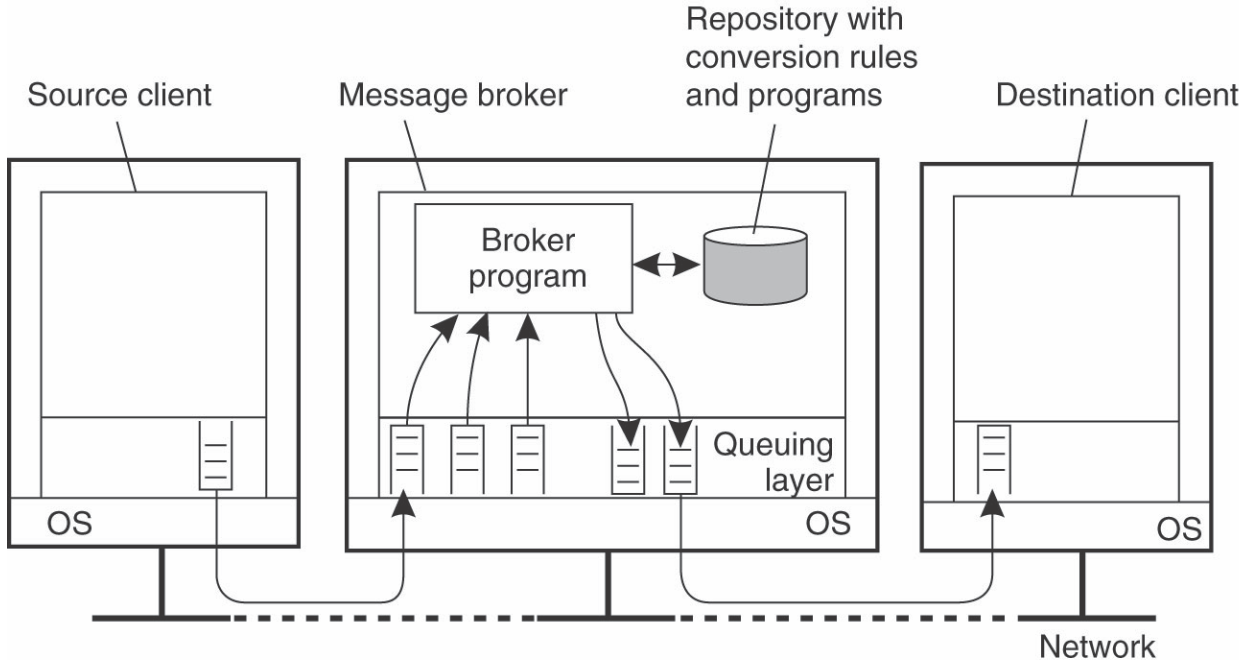
- Acts as an application-level gateway
- convert incoming messages so that they can be understood by the destination application
- Message queuing system 입장에서, just another application일 뿐이야
- Enterprise Application Integration (EAI) 환경에서도 쓸수 있다.
Stream-oriented communication
기존에는 discrete data들만 다뤘는데 연속적으로 전달되어야 하는 stream은 뭐가 중요한가
- e.g. sound, multi-media, movie
- Timing plays a crucial role
- To capture timing aspects, there are different transmission modes
- Asynchronous transmission mode: Timing constraint가 없다
- Synchronous transmission mode: Timing constraints 존재, maximum end-to-end delay가 정의되어 있어 e.g. sensor data
- Isochronous transmission mode: Timing constraints 존재, maximum, minimum end-to-end delay 정의 e.g. multimedia systems
This post is licensed under CC BY 4.0 by the author.